Talking About Technology in French: AI Dialogue & Beginner Questions 🤖
Learn beginner French with a fun dialogue about ChatGPT. Discover key A1 vocabulary for talking about technology, friends, and making plans.
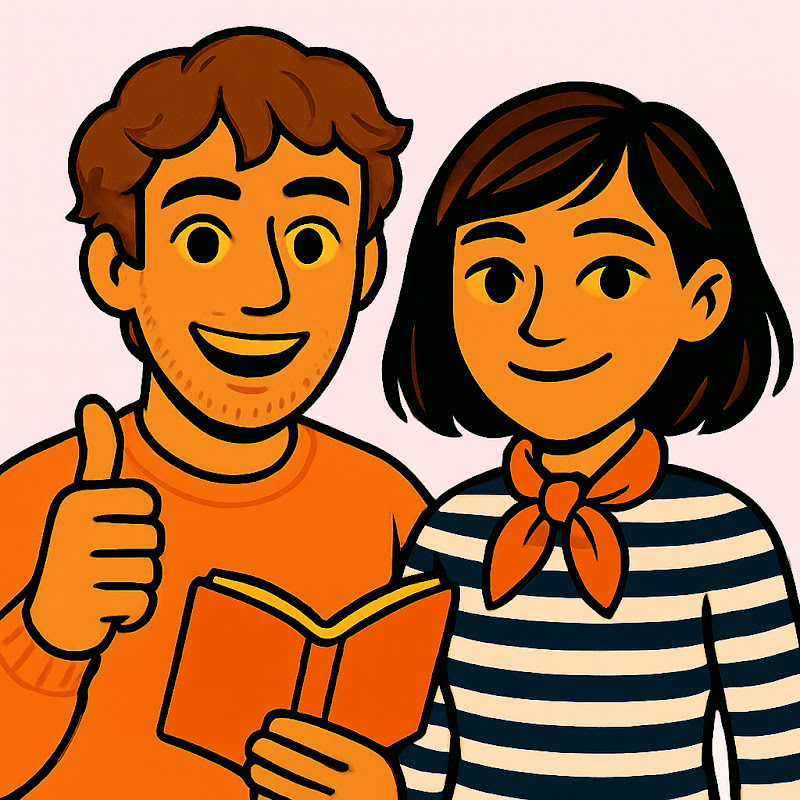
In this A1 French lesson, you’ll join Léo and Chloé for a surprising conversation. Léo has a new friend, but it’s not what Chloé expects! This dialogue is perfect for beginners to practice asking questions, using the negative form, and learning essential vocabulary related to technology and daily life.
💬 Video Transcript
Chloé: Salut Léo ! Ça va ?
(Chloé: Hi Léo! How are you?)
Léo: Salut Chloé ! Oui, ça va bien. Et toi ?
(Léo: Hi Chloé! Yes, I’m fine. And you?)
Chloé: Ça va. Qu’est-ce que tu fais ? Tu regardes ton ordinateur.
(Chloé: I’m fine. What are you doing? You’re looking at your computer.)
Léo: Non. Je ne regarde pas. Je parle.
(Léo: No. I’m not looking. I’m talking.)
Chloé: Tu parles ? À qui ? Je ne vois personne ici.
(Chloé: You’re talking? To whom? I don’t see anyone here.)
Léo: Je parle à mon nouvel ami.
(Léo: I’m talking to my new friend.)
Chloé: Ton nouvel ami ? Il est où, ton ami ?
(Chloé: Your new friend? Where is he, your friend?)
Léo: Il est ici. Dans mon ordinateur.
(Léo: He’s here. In my computer.)
Chloé: Dans ton ordinateur ? C’est une blague, Léo ?
(Chloé: In your computer? Is this a joke, Léo?)
Léo: Non, ce n’est pas une blague. Il s’appelle ChatGPT.
(Léo: No, it’s not a joke. His name is ChatGPT.)
Chloé: Chat… G… P… T… C’est un nom bizarre. C’est qui ?
(Chloé: Chat… G… P… T… That’s a weird name. Who is it?)
Léo: C’est… un robot très intelligent. Il est dans l’ordinateur. Et il parle.
(Léo: It’s… a very intelligent robot. It’s in the computer. And it talks.)
Chloé: Un robot qui parle ? D’accord. Montre-moi.
(Chloé: A robot that talks? Okay. Show me.)
Léo: OK. Je pose une question. Regarde. “Bonjour. Comment ça va ?”
(Léo: OK. I’m asking a question. Look. “Hello. How are you?”)
Chloé: Et il répond ?
(Chloé: And it answers?)
Léo: Oui, il répond. Écoute. Il dit : “Bonjour ! Je vais bien, merci. Je suis prêt à vous aider.”
(Léo: Yes, it answers. Listen. It says: “Hello! I am well, thank you. I am ready to help you.”)
Chloé: Wow. C’est rapide.
(Chloé: Wow. That’s fast.)
Léo: Oui, très rapide ! Je pose une autre question. “Quel est ton nom ?”
(Léo: Yes, very fast! I’m asking another question. “What is your name?”)
Chloé: Il a un nom ?
(Chloé: It has a name?)
Léo: Il répond : “Je n’ai pas de nom. Je suis une intelligence artificielle.”
(Léo: It answers: “I do not have a name. I am an artificial intelligence.”)
Chloé: C’est un peu difficile, ce mot. Mais c’est intéressant.
(Chloé: That word is a bit difficult. But it’s interesting.)
Léo: Très intéressant ! Je pose des questions… et il répond à tout. Regarde. “Quelle est ta couleur préférée ?”
(Léo: Very interesting! I ask questions… and it answers everything. Look. “What is your favorite color?”)
Chloé: Alors ? Sa couleur préférée, c’est le bleu ? Ou le vert ?
(Chloé: So? Its favorite color is blue? Or green?)
Léo: Il dit : “Je suis un programme. Je n’ai pas de couleur préférée.”
(Léo: It says: “I am a program. I do not have a favorite color.”)
Chloé: Ah. C’est une réponse logique.
(Chloé: Ah. That’s a logical answer.)
Léo: Oui. C’est très logique. Maintenant, une question sur la nourriture. “Tu aimes le fromage ?”
(Léo: Yes. It’s very logical. Now, a question about food. “Do you like cheese?”)
Chloé: J’aime beaucoup le fromage. Est-ce que ton ami aime le fromage ?
(Chloé: I like cheese a lot. Does your friend like cheese?)
Léo: Il répond : “Je ne mange pas. Mais le fromage est très populaire en France.”
(Léo: It answers: “I do not eat. But cheese is very popular in France.”)
Chloé: Il est très intelligent.
(Chloé: It is very intelligent.)
Léo: Oui ! Maintenant, une question sur les animaux. “Tu aimes les chats ?”
(Léo: Yes! Now, a question about animals. “Do you like cats?”)
Chloé: Comme Ombre ! Ombre est juste ici.
(Chloé: Like Ombre! Ombre is right here.)
Léo: Alors… il répond : “Oui, les chats sont des animaux très intéressants.” Ombre est content !
(Léo: So… it answers: “Yes, cats are very interesting animals.” Ombre is happy!)
Chloé: Léo, je peux poser une question ? S’il te plaît ?
(Chloé: Léo, can I ask a question? Please?)
Léo: Bien sûr ! Quelle est ta question ?
(Léo: Of course! What is your question?)
Chloé: Je veux savoir le temps qu’il fait. Je demande : “Quel temps fait-il à Paris aujourd’hui ?”
(Chloé: I want to know what the weather is like. I ask: “What is the weather like in Paris today?”)
Léo: Bonne question, Chloé. C’est une question pratique.
(Léo: Good question, Chloé. It’s a practical question.)
Chloé: Alors ? Il répond quoi ?
(Chloé: So? What does it answer?)
Léo: Il dit… “Aujourd’hui à Paris, il fait beau. Il y a du soleil.”
(Léo: It says… “Today in Paris, the weather is nice. It is sunny.”)
Chloé: C’est parfait pour aller au parc !
(Chloé: That’s perfect for going to the park!)
Léo: C’est vrai ! Oh, une dernière question. Ma question. “ChatGPT, tu es mon ami ?”
(Léo: That’s true! Oh, one last question. My question. “ChatGPT, are you my friend?”)
Chloé: Oh Léo… Qu’est-ce qu’il répond à ça ?
(Chloé: Oh Léo… What does it answer to that?)
Léo: Il répond : “Je suis un assistant. Mais je suis content de parler avec vous.”
(Léo: It answers: “I am an assistant. But I am happy to talk with you.”)
Chloé: Un assistant… pas un ami.
(Chloé: An assistant… not a friend.)
Léo: Mais c’est presque un ami ! C’est super !
(Léo: But it’s almost a friend! It’s great!)
Chloé: Léo… C’est un ordinateur. C’est utile, c’est pratique. Mais un ami, c’est une personne.
(Chloé: Léo… It’s a computer. It’s useful, it’s practical. But a friend is a person.)
Léo: Une personne ?
(Léo: A person?)
Chloé: Oui. Un ami va au parc avec toi. Est-ce que ChatGPT va au parc avec nous ?
(Chloé: Yes. A friend goes to the park with you. Does ChatGPT go to the park with us?)
Léo: Euh… non. Il reste ici, dans l’ordinateur.
(Léo: Uh… no. It stays here, in the computer.)
Chloé: Exactement. Alors, tu viens au parc ? Avec ta VRAIE amie ?
(Chloé: Exactly. So, are you coming to the park? With your REAL friend?)
Léo: Oui, Chloé. Tu as raison. C’est une bien meilleure idée. Allons au parc.
(Léo: Yes, Chloé. You’re right. That’s a much better idea. Let’s go to the park.)
Chloé: Super !
(Chloé: Great!)
Léo: Au revoir, l’ordinateur ! À plus tard !
(Léo: Goodbye, computer! See you later!)
Chloé: Allez, viens Léo.
(Chloé: Come on, Léo.)
📝 Essential Vocabulary
Here are some key words and phrases from the dialogue. Listen and practice your pronunciation.
| Target Language | English Translation | Pronunciation |
|---|---|---|
| un ordinateur | a computer | |
| un nouvel ami | a new friend | |
| C’est une blague ? | Is it a joke? | |
| poser une question | to ask a question | |
| il répond | he/it answers | |
| intelligence artificielle | artificial intelligence | |
| logique | logical | |
| Quel temps fait-il ? | What’s the weather like? | |
| un assistant | an assistant |
🔍 Grammar Focus
This dialogue features two fundamental grammar points for French beginners.
1. The Negative Form: ne... pas
To make a sentence negative in French, you typically wrap the verb with ne and pas. The structure is Subject + ne + Verb + pas. You can see this pattern multiple times in the dialogue.
Je **ne** regarde **pas**.(I am not looking.)Ce **n'**est **pas** une blague.(It’s not a joke.) Note:nebecomesn'before a vowel.Je **n'**ai **pas** de nom.(I do not have a name.)Je **ne** mange **pas**.(I do not eat.)
This is the most common way to express negation in French and is essential for everyday conversation.
2. Asking Questions
Our characters ask a lot of questions! Notice the different ways they do it.
Using Question Words: Words like où (where), qui (who), quel (what/which), and qu'est-ce que (what) are used at the beginning of the sentence.
**Qu'est-ce que** tu fais ?(What are you doing?)**Il est où**, ton ami ?(Where is he, your friend?) - This is a common spoken structure.**Quel est** ton nom ?(What is your name?)**Quel temps fait-il** à Paris ?(What’s the weather like in Paris?)
With Rising Intonation: You can also turn a statement into a question simply by raising your voice at the end. This is very common in spoken French.
Tu parles ?(You’re talking?)Il a un nom ?(It has a name?)C'est une blague, Léo ?(Is it a joke, Léo?)
🌍 Cultural Tip
🃏 Flip & Learn
Review the key phrases from the dialogue with these flashcards.
What are you doing?
Qu'est-ce que tu fais ?
It's not a joke.
Ce n'est pas une blague.
Can I ask a question?
Je peux poser une question ?
What's the weather like?
Quel temps fait-il ?
You're right.
Tu as raison.
💡 Key Takeaways
Here are the most important points to remember from this lesson:
- Forming Negations: To say “not” in French, place
nebefore the verb andpasafter it. Remember thatnechanges ton'before a vowel sound (e.g.,n'est pas). - Asking Simple Questions: You can ask questions using question words like
qu'est-ce que,où, andquel, or by simply raising your intonation at the end of a statement. - Technology Vocabulary: You learned useful words for modern life, such as
un ordinateur(a computer),un robot(a robot), andune intelligence artificielle(an artificial intelligence). - Friendship and Plans: The dialogue shows how to talk about friends (
un ami/une amie) and make simple plans, likeAllons au parc(Let’s go to the park).
🎯 Practice Quiz
Test your understanding of the dialogue and grammar.
Question
Question
Question
✍️ Fill in the Blanks
Let’s test your spelling and memory! Fill in the missing words below. Use correct spelling.
Fill in the blank
Fill in the blank
Support Us
Did you find this lesson helpful? Your support is what makes it possible for us to keep creating free, high-quality educational content.