Talking About Fitness in French: Body Parts & Workout Dialogue 💪
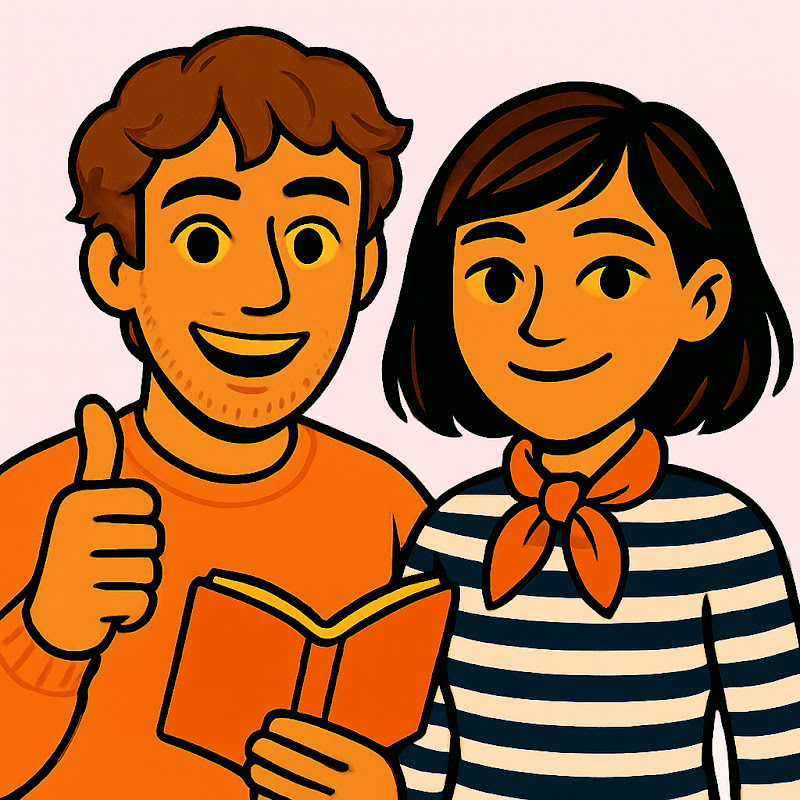
Join Léo and Chloé for a fun workout challenge in slow French! Learn essential A1 vocabulary for body parts and simple actions like 'lift,' 'lower,' and 'jump'.
In this A1 French lesson, you’ll join Léo as he gets a surprise workout session from his friend and new “coach,” Chloé. You’ll learn essential vocabulary for body parts like arms and legs, and key action verbs like lever (to lift), baisser (to lower), and sauter (to jump), all in a fun and easy-to-follow dialogue.
💬 Video Transcript
Chloé: Salut Léo ! Je suis là ! Léo ?
(Chloé: Hi Léo! I’m here! Léo?)
Léo: Chloé ! Salut ! Je suis dans le salon.
(Léo: Chloé! Hi! I’m in the living room.)
Chloé: Léo, qu’est-ce que tu fais par terre ?
(Chloé: Léo, what are you doing on the floor?)
Léo: Je fais du sport, Chloé. C’est difficile.
(Léo: I’m working out, Chloé. It’s difficult.)
Chloé: Ah ah ! Tu fais du sport ? C’est une bonne idée. Je peux faire du sport avec toi ?
(Chloé: Ah ha! You’re working out? That’s a good idea. Can I work out with you?)
Léo: Oui ! Super ! Tu es mon coach, Chloé.
(Léo: Yes! Great! You are my coach, Chloé.)
Chloé: D’accord. Je suis ton coach. Prêt ?
(Chloé: Okay. I am your coach. Ready?)
Léo: Oui, je suis prêt !
(Léo: Yes, I’m ready!)
Chloé: Parfait. On commence. D’abord, on lève le bras droit.
(Chloé: Perfect. Let’s start. First, we lift the right arm.)
Léo: Le bras droit… comme ça ?
(Léo: The right arm… like this?)
Chloé: Oui, Léo. Très bien. Maintenant, on baisse le bras droit.
(Chloé: Yes, Léo. Very good. Now, we lower the right arm.)
Léo: D’accord. Je baisse le bras droit.
(Léo: Okay. I’m lowering the right arm.)
Chloé: Maintenant, le bras gauche. On lève le bras gauche.
(Chloé: Now, the left arm. We lift the left arm.)
Léo: Le bras gauche… c’est ce bras ?
(Léo: The left arm… is it this arm?)
Chloé: Non, Léo, ça, c’est le bras droit. L’autre bras.
(Chloé: No, Léo, that’s the right arm. The other arm.)
Léo: Ah, oui. Le bras gauche. Comme ça.
(Léo: Ah, yes. The left arm. Like this.)
Chloé: Voilà ! C’est facile, non ?
(Chloé: There you go! It’s easy, right?)
Léo: Oui, c’est facile.
(Léo: Yes, it’s easy.)
Chloé: Ok. Maintenant, les jambes. On lève la jambe droite.
(Chloé: Ok. Now, the legs. We lift the right leg.)
Léo: La jambe droite… Ouh là ! C’est difficile !
(Léo: The right leg… Whoa! It’s difficult!)
Chloé: Allez, Léo ! Courage ! La jambe droite.
(Chloé: Come on, Léo! You can do it! The right leg.)
Léo: D’accord, d’accord. Je lève la jambe droite. Et maintenant ?
(Léo: Okay, okay. I’m lifting the right leg. And now?)
Chloé: Maintenant, tu baisses la jambe droite. Doucement.
(Chloé: Now, you lower the right leg. Slowly.)
Léo: Ok… je baisse la jambe droite. Fini ?
(Léo: Ok… I’m lowering the right leg. Finished?)
Chloé: Non ! Maintenant, la jambe gauche. On lève la jambe gauche.
(Chloé: No! Now, the left leg. We lift the left leg.)
Léo: La jambe gauche ! Ah, c’est haut ?
(Léo: The left leg! Ah, is this high?)
Chloé: Oui, Léo, c’est très bien. Tu es un champion !
(Chloé: Yes, Léo, that’s very good. You are a champion!)
Léo: Merci, coach ! Je baisse la jambe gauche maintenant.
(Léo: Thanks, coach! I’m lowering the left leg now.)
Chloé: Parfait. L’exercice final. C’est le plus amusant.
(Chloé: Perfect. The final exercise. It’s the most fun.)
Léo: Ah oui ? C’est quoi ?
(Léo: Oh really? What is it?)
Chloé: On saute ! Allez, saute !
(Chloé: We jump! Come on, jump!)
Léo: Je saute ? Ok ! Je saute, je saute, je saute.
(Léo: I jump? Ok! I’m jumping, I’m jumping, I’m jumping.)
Chloé: Moi aussi ! Je saute, je saute. C’est amusant !
(Chloé: Me too! I’m jumping, I’m jumping. It’s fun!)
Léo: Oui, c’est… Pfiou… je suis fatigué.
(Léo: Yes, it’s… Phew… I’m tired.)
Chloé: Tu es fatigué ? Déjà ?
(Chloé: You’re tired? Already?)
Léo: Oui, très fatigué. Le sport, c’est difficile.
(Léo: Yes, very tired. Sports are difficult.)
Chloé: Un peu. Mais c’est bien. On arrête pour aujourd’hui.
(Chloé: A little. But it’s good. Let’s stop for today.)
Léo: Bonne idée. J’ai chaud.
(Léo: Good idea. I’m hot.)
Chloé: Moi aussi, j’ai chaud. Et j’ai soif.
(Chloé: Me too, I’m hot. And I’m thirsty.)
Léo: J’ai soif aussi. On boit de l’eau ?
(Léo: I’m thirsty too. Shall we drink some water?)
Chloé: Oui. On boit un grand verre d’eau.
(Chloé: Yes. Let’s drink a big glass of water.)
Léo: Super idée. Merci, coach Chloé !
(Léo: Great idea. Thanks, coach Chloé!)
Chloé: De rien, champion Léo !
(Chloé: You’re welcome, champion Léo!)
📝 Essential Vocabulary
Here are some key words and phrases from Léo and Chloé’s workout. Listen and repeat to practice your pronunciation.
| Target Language | English Translation | Pronunciation |
|---|---|---|
| Faire du sport | To do sports / to work out | |
| Le bras | The arm | |
| La jambe | The leg | |
| Droit / Droite | Right | |
| Gauche | Left | |
| Lever | To lift / to raise | |
| Baisser | To lower | |
| Sauter | To jump | |
| Fatigué(e) | Tired | |
| J’ai soif | I’m thirsty |
🔍 Grammar Focus
Let’s look at two important grammar points from the dialogue.
1. Using On for “We” and Informal Commands
In French, the pronoun on is very common in everyday conversation. While it can mean “one” or “they” in a general sense, it’s most frequently used as an informal substitute for nous (we). When Chloé acts as Léo’s coach, she uses on to give instructions that they will do together.
Examples from the script:
- On commence. -> Let’s start. / We start.
- D’abord, on lève le bras droit. -> First, we lift the right arm.
- On saute ! -> We jump! / Let’s jump!
- On arrête pour aujourd’hui. -> Let’s stop for today. / We’re stopping for today.
Notice that even though on means “we,” the verb is always conjugated in the third-person singular form, just like il (he) or elle (she).
2. Expressing Feelings with Avoir
In English, we use the verb “to be” to describe feelings like being hot, thirsty, or hungry (e.g., “I am hot”). In French, many of these common physical states use the verb avoir (to have). This is a key difference to remember!
At the end of their workout, Léo and Chloé are feeling the effects:
- Léo: Bonne idée. J’ai chaud. -> Good idea. I’m hot. (Literally: “I have heat.”)
- Chloé: Moi aussi, j’ai chaud. Et j’ai soif. -> Me too, I’m hot. And I’m thirsty. (Literally: “I have thirst.”)
Memorizing these avoir expressions is essential for sounding natural in French.
🌍 Cultural Tip
🃏 Flip & Learn
Use these flashcards to test your memory of key phrases from the workout.
To do sports / To work out
Faire du sport
We lift the left leg.
On lève la jambe gauche.
I am tired.
Je suis fatigué.
I'm hot and I'm thirsty.
J'ai chaud et j'ai soif.
You're welcome, champion!
De rien, champion !
💡 Key Takeaways
Here are the most important points to remember from this lesson:
- Body Parts: You learned the words for arm (
le bras) and leg (la jambe), along with the directions left (gauche) and right (droit/droite). - Workout Verbs: You can now use essential action verbs like
lever(to lift),baisser(to lower), andsauter(to jump). - Using
On: Remember thatonis a very common and informal way to say “we” or to give friendly instructions, as in “On commence !” (Let’s start!). - Feelings with
Avoir: Don’t forget to useavoirfor common physical states. SayJ'ai chaudfor “I’m hot” andJ'ai soiffor “I’m thirsty.”
🎯 Practice Quiz
Check your understanding with this short quiz.
Question
Question
Question
✍️ Fill in the Blanks
Let’s test your spelling and memory! Fill in the missing words below. Use correct spelling.
Fill in the blank
Fill in the blank
Support Us
Did you find this lesson helpful? Your support is what makes it possible for us to keep creating free, high-quality educational content.