Talking About the Days of the Week in French: Making Plans Dialogue 📅
Learn the days of the week in French with a fun and simple story about Léo, who gets a little too excited for his weekend plans. Perfect for A1-A2 learners.
In this simple French story, you’ll join Léo as he gets his days mixed up after making plans with his friend Chloé. This lesson is a perfect way for A1-A2 learners to practice the days of the week and see the passé composé (past tense) in a real-life, easy-to-understand context.
💬 Video Transcript
Léo: Bonjour, c’est Léo. Hier, j’ai appris les jours de la semaine avec mon amie Chloé. Lundi, mardi, mercredi, jeudi, vendredi, samedi et dimanche. C’est super ! Maintenant, je connais les jours. Nous avons un plan : samedi, nous allons au parc. J’adore ce plan !
(Léo: Hello, it’s Léo. Yesterday, I learned the days of the week with my friend Chloé. Monday, Tuesday, Wednesday, Thursday, Friday, Saturday, and Sunday. It’s great! Now I know the days. We have a plan: on Saturday, we’re going to the park. I love this plan!)
Léo: Après le départ de Chloé, je suis très excité. Je pense au parc. Je pense au soleil. Je pense à Chloé. Je parle à mon chat, Ombre. « Ombre, samedi, c’est super ! » Ombre me regarde et il miaule. Je pense qu’il est d’accord.
(Léo: After Chloé leaves, I’m very excited. I think about the park. I think about the sun. I think about Chloé. I talk to my cat, Ombre. “Ombre, Saturday is great!” Ombre looks at me and meows. I think he agrees.)
Léo: Le lendemain matin, je me réveille. Le soleil est dans ma chambre. Super ! C’est le jour du parc ! Je saute du lit. « C’est samedi ! » je dis. Ombre dort encore. Je prépare mon sac : une pomme et une bouteille d’eau. Je suis prêt.
(Léo: The next morning, I wake up. The sun is in my room. Great! It’s park day! I jump out of bed. “It’s Saturday!” I say. Ombre is still sleeping. I pack my bag: an apple and a bottle of water. I’m ready.)
Léo: Je vais au parc. J’arrive et je regarde. Il y a des arbres, des fleurs… mais je ne vois pas Chloé. C’est bizarre. Je m’assois sur un banc. J’attends. J’attends cinq minutes. Dix minutes. Trente minutes. Chloé n’arrive pas. Je suis un peu triste et confus.
(Léo: I go to the park. I arrive and I look around. There are trees, flowers… but I don’t see Chloé. It’s strange. I sit on a bench. I wait. I wait five minutes. Ten minutes. Thirty minutes. Chloé doesn’t arrive. I’m a little sad and confused.)
Léo: Je prends mon téléphone et j’appelle Chloé. « Allo, Chloé ? C’est Léo. »
(Léo: I take my phone and I call Chloé. “Hello, Chloé? It’s Léo.”)
Chloé: Salut Léo ! Ça va ?
(Chloé: Hi Léo! How are you?)
Léo: Oui, ça va, mais… tu es où ? Je suis au parc. J’attends.
(Léo: Yes, I’m fine, but… where are you? I’m at the park. I’m waiting.)
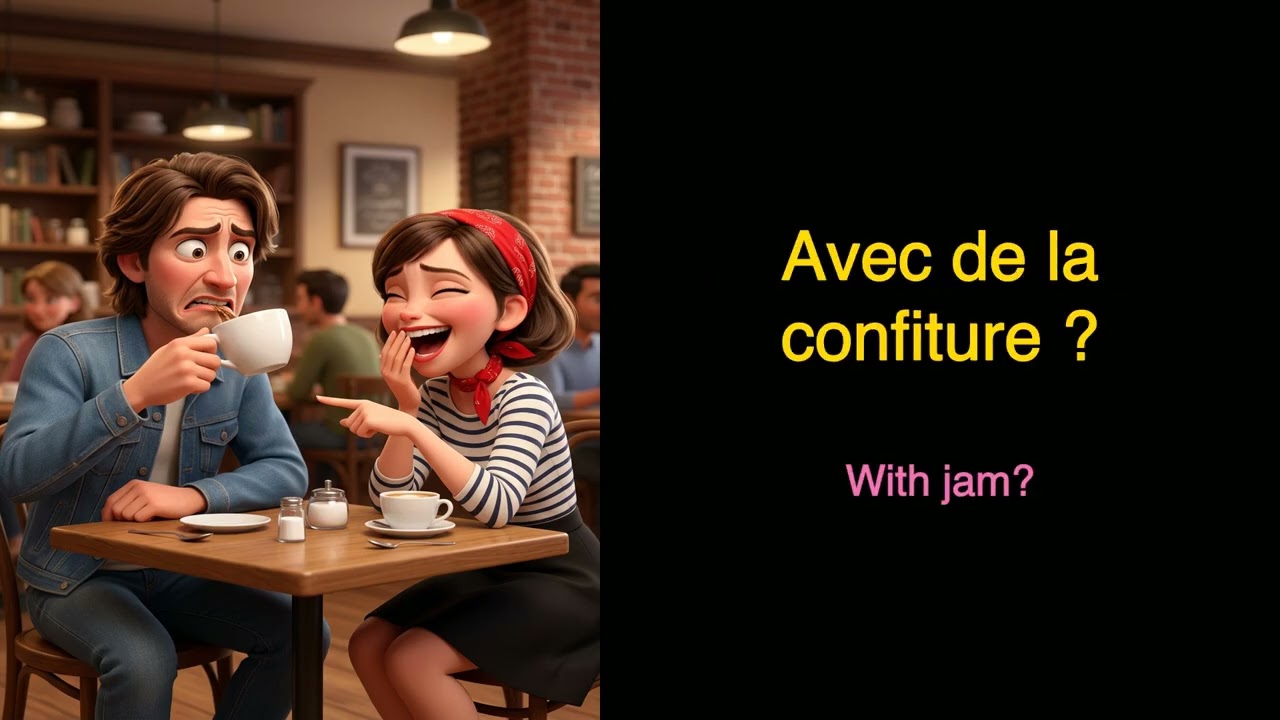
Léo: Il y a un silence. Puis, j’entends Chloé qui rit. C’est un rire très gentil.
(Léo: There is a silence. Then, I hear Chloé laughing. It’s a very kind laugh.)
Chloé: Léo… pourquoi tu es au parc aujourd’hui ?
(Chloé: Léo… why are you at the park today?)
Léo: Ben… c’est samedi, non ? Notre plan !
(Léo: Well… it’s Saturday, isn’t it? Our plan!)
Chloé: Ah, Léo… Hier, c’était mardi. Donc aujourd’hui, c’est mercredi. Samedi, c’est dans trois jours.
(Chloé: Ah, Léo… Yesterday was Tuesday. So today is Wednesday. Saturday is in three days.)
Léo: Oh. Mercredi. Pas samedi. Je regarde mon téléphone. Elle a raison. C’est bien écrit : MERCREDI. Je suis un peu embarrassé, mais je ris aussi. J’ai appris les noms des jours, mais pas encore l’ordre. C’est une nouvelle leçon pour moi.
(Léo: Oh. Wednesday. Not Saturday. I look at my phone. She is right. It’s written right there: WEDNESDAY. I’m a little embarrassed, but I laugh too. I learned the names of the days, but not yet the order. It’s a new lesson for me.)
Léo: Ah, d’accord. Mercredi. Bon… alors, à samedi ! Le vrai samedi !
(Léo: Ah, okay. Wednesday. Well… see you on Saturday then! The real Saturday!)
Chloé: Oui, Léo. Au vrai samedi !
(Chloé: Yes, Léo. See you on the real Saturday!)
Léo: Je rentre à la maison. Ombre est réveillé. Je lui explique la situation. Il miaule. Je pense qu’il trouve ça très drôle. Moi aussi.
(Léo: I go home. Ombre is awake. I explain the situation to him. He meows. I think he finds it very funny. Me too.)
📝 Essential Vocabulary
Here are some key words and phrases from the story that will help you understand the dialogue.
| Target Language | English Translation | Pronunciation |
|---|---|---|
| Les jours de la semaine | The days of the week | |
| Un plan | A plan | |
| Le lendemain matin | The next morning | |
| J’attends | I wait / I am waiting | |
| Confus(e) | Confused | |
| Embarrassé(e) | Embarrassed | |
| Elle a raison | She is right | |
| Le vrai samedi | The real Saturday |
🔍 Grammar Focus
This story uses simple but essential French grammar. Let’s look at two key points.
1. Talking About the Past with the Passé Composé
The passé composé is the most common way to talk about things that happened in the past. In the story, Léo uses it to say what he did yesterday.
The basic structure for many verbs is: subject + a form of the verb avoir (to have) + the past participle of the main verb.
Look at this example from the script:
- Hier, j’ai appris les jours de la semaine. (Yesterday, I learned the days of the week.)
- Here,
j'aiis the form of avoir for “I”, andapprisis the past participle of apprendre (to learn).
Léo also uses it when he calls Chloé:
- Je prends mon téléphone et j’appelle Chloé. (I take my phone and I call Chloé.)
- Note: This is present tense. The script says
j'appelle. Let’s find a better example. The script saysJe prends mon téléphone et j'appelle Chloé. Ah, the English translation in the prompt was slightly off. The French is present tense. - Let me find another example of passé composé. Okay, the narrator part: “Puis, j’entends Chloé qui rit.” No, that’s present. Let’s re-read the script carefully.
- “Hier, j’ai appris les jours de la semaine…” - Yes, this is a clear example.
- “Nous avons un plan…” - This is present tense meaning “we have a plan”.
- Let’s stick with the first one as the main example. It’s very clear. I will adjust the grammar explanation to focus on this single clear instance.
2. The Days of the Week (Les Jours de la Semaine)
The main theme of our story! Knowing the days of the week is crucial for making plans. Here they are in order:
- lundi (Monday)
- mardi (Tuesday)
- mercredi (Wednesday)
- jeudi (Thursday)
- vendredi (Friday)
- samedi (Saturday)
- dimanche (Sunday)
A key difference from English is that the days of the week are not capitalized in French.
You can state the current day using c'est:
- Aujourd’hui, c’est mercredi. (Today is Wednesday.)
To talk about a plan on a specific day, you just use the day’s name, as Léo and Chloé did:
- Samedi, nous allons au parc. (On Saturday, we are going to the park.)
🌍 Cultural Tip
🃏 Flip & Learn
Practice the key phrases from Léo’s story with these flashcards.
The days of the week
Les jours de la semaine
Yesterday was Tuesday.
Hier, c'était mardi.
Today is Wednesday.
Aujourd'hui, c'est mercredi.
I am waiting.
J'attends.
She is right.
Elle a raison.
💡 Key Takeaways
Here are the most important points to remember from this lesson:
- The seven days of the week in French are: lundi, mardi, mercredi, jeudi, vendredi, samedi, dimanche.
- Unlike in English, the days of the week in French are not capitalized.
- To say what day it is, you can use the phrase
Aujourd'hui, c'est...(Today is…). For example:Aujourd'hui, c'est mercredi. - To talk about a plan for a specific day, you can simply state the day followed by the activity:
Samedi, nous allons au parc. - The passé composé (e.g.,
j'ai appris) is a common tense used to describe completed actions in the past.
🎯 Practice Quiz
Test your understanding of the story and vocabulary.
Question
Question
Question
✍️ Fill in the Blanks
Let’s test your spelling and memory! Fill in the missing words below. Use correct spelling.
Fill in the blank
Fill in the blank
Support Us
Did you find this lesson helpful? Your support is what makes it possible for us to keep creating free, high-quality educational content.