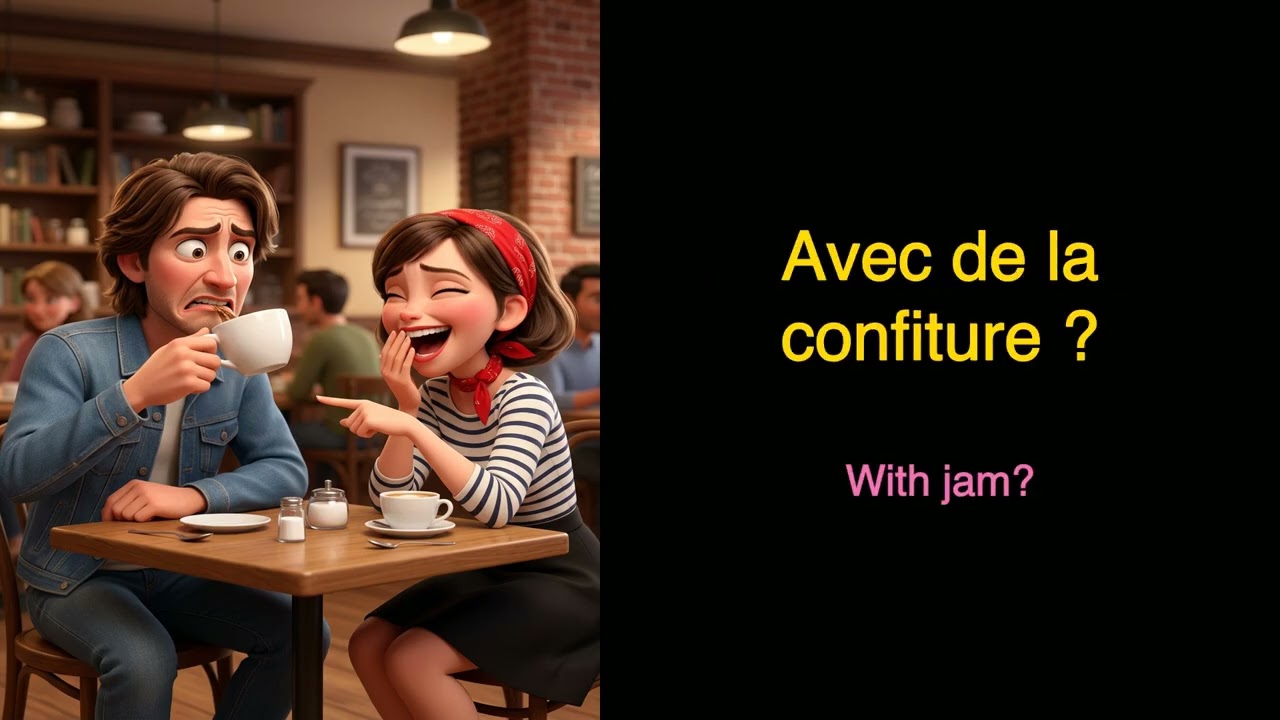
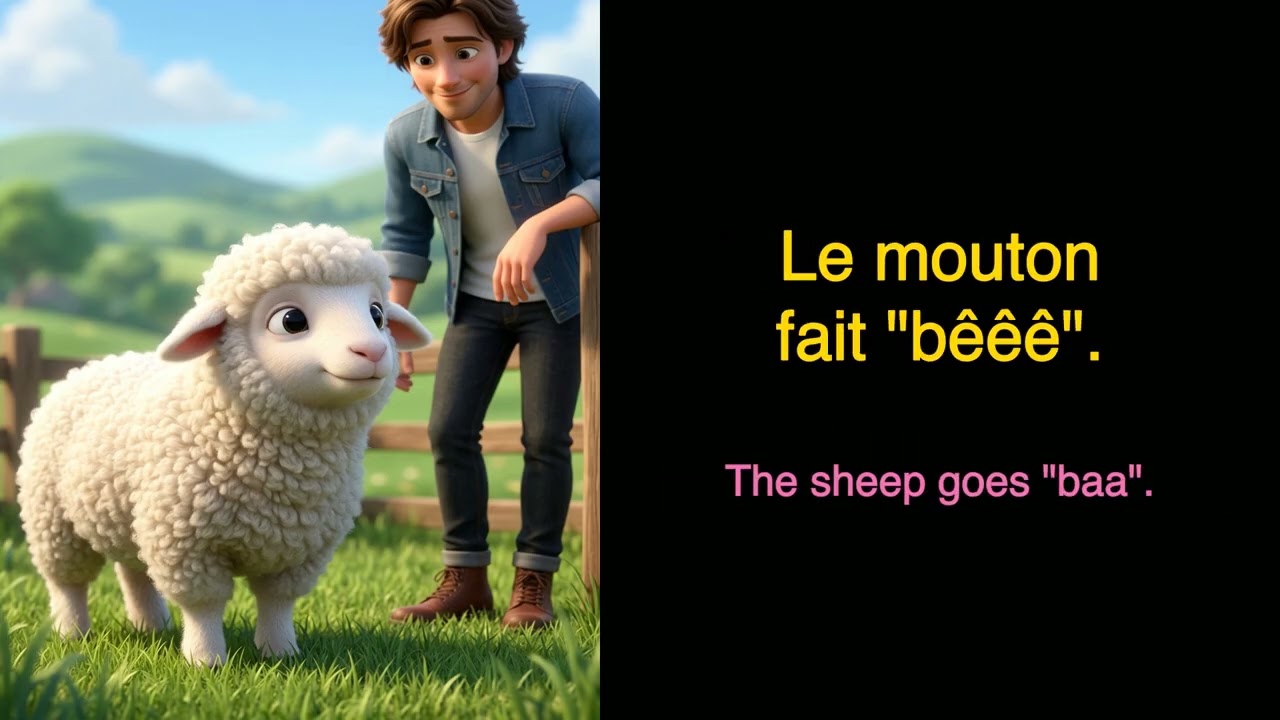
How to Buy a Train Ticket in French: Station Dialogue & Travel Vocabulary 🚆
Learn how to buy a train ticket in French with our slow A1 dialogue. Master key phrases like 'Je voudrais un billet' and 'aller-retour' for your next trip to France.
Buying a ticket at a train station can be intimidating in a new language. In this lesson, follow along as Léo overcomes his nervousness with a little help from his friend Chloé. You’ll learn the essential French phrases for stating your destination, choosing the right kind of ticket, and completing your purchase with confidence.
💬 Video Transcript
Léo: Bonjour Chloé !
(Léo: Hello Chloé!)
Chloé: Bonjour Léo ! Alors, tu es prêt ? On va à la gare ?
(Chloé: Hello Léo! So, are you ready? Are we going to the station?)
Léo: Oui ! Je suis prêt. Mais… je suis un peu nerveux.
(Léo: Yes! I’m ready. But… I’m a little nervous.)
Chloé: Nerveux ? Pourquoi tu es nerveux, Léo ?
(Chloé: Nervous? Why are you nervous, Léo?)
Léo: Je dois acheter un billet de train. Tout seul. Je ne sais pas comment faire.
(Léo: I have to buy a train ticket. All alone. I don’t know how to do it.)
Chloé: Mais non, ce n’est pas difficile ! C’est très facile. Je vais t’aider.
(Chloé: No, it’s not difficult! It’s very easy. I’m going to help you.)
Léo: Ah, super ! Merci beaucoup, Chloé.
(Léo: Oh, great! Thank you very much, Chloé.)
Chloé: De rien. Alors, on va au guichet. Tu sais, là où on achète les billets.
(Chloé: You’re welcome. So, we’re going to the ticket counter. You know, where you buy the tickets.)
Léo: D’accord. Mais, qu’est-ce que je dois dire ?
(Léo: Okay. But, what should I say?)
Chloé: C’est simple. D’abord, tu dis bonjour.
(Chloé: It’s simple. First, you say hello.)
Léo: Bonjour. Ça, c’est facile.
(Léo: Hello. That’s easy.)
Chloé: Oui. Après, tu dis ce que tu veux. Tu veux un billet de train.
(Chloé: Yes. After, you say what you want. You want a train ticket.)
Léo: Donc… Je dis : “Je veux un billet de train”.
(Léo: So… I say: “I want a train ticket”.)
Chloé: C’est bien. Ou, pour être plus poli, tu peux dire : “Je voudrais un billet de train”.
(Chloé: That’s good. Or, to be more polite, you can say: “I would like a train ticket”.)
Léo: Je voudrais un billet de train. D’accord, je comprends. Je voudrais un billet de train.
(Léo: I would like a train ticket. Okay, I understand. I would like a train ticket.)
Chloé: Parfait ! Après, il faut dire la destination. Où tu vas ?
(Chloé: Perfect! After, you have to say the destination. Where are you going?)
Léo: Je vais à Lyon. Pour voir ma grand-mère.
(Léo: I’m going to Lyon. To see my grandmother.)
Chloé: Très bien. Donc tu dis : “pour Lyon”.
(Chloé: Very good. So you say: “for Lyon”.)
Léo: Pour Lyon. D’accord. Alors… “Bonjour. Je voudrais un billet de train pour Lyon.”
(Léo: For Lyon. Okay. So… “Hello. I would like a train ticket for Lyon.”)
Chloé: Excellent, Léo ! C’est exactement ça.
(Chloé: Excellent, Léo! That’s exactly it.)
Léo: Et c’est tout ?
(Léo: And is that all?)
Chloé: La personne va peut-être demander : “Pour quel jour ?”
(Chloé: The person might ask: “For what day?”)
Léo: Ah oui. Le billet, c’est pour demain. Samedi.
(Léo: Oh yes. The ticket is for tomorrow. Saturday.)
Chloé: Alors, tu réponds simplement : “Pour demain, s’il vous plaît.”
(Chloé: So, you simply answer: “For tomorrow, please.”)
Léo: Pour demain, s’il vous plaît. D’accord. C’est facile.
(Léo: For tomorrow, please. Okay. It’s easy.)
Chloé: On répète une fois ? Je suis la vendeuse au guichet.
(Chloé: Shall we practice one time? I’m the ticket agent at the counter.)
Léo: D’accord, c’est une bonne idée.
(Léo: Okay, that’s a good idea.)
Chloé: Voix un peu différente Bonjour monsieur.
(Chloé: Slightly different voice Hello sir.)
Léo: Bonjour madame. Je… je voudrais un billet de train… pour Lyon… pour demain.
(Léo: Hello ma’am. I… I would like a train ticket… for Lyon… for tomorrow.)
Chloé: Très bien ! Aller simple ou aller-retour ?
(Chloé: Very good! One-way or round-trip?)
Léo: Oh ! Qu’est-ce que ça veut dire ? “Aller-retour” ?
(Léo: Oh! What does that mean? “Aller-retour”?)
Chloé: “Aller simple”, c’est juste pour aller à Lyon. “Aller-retour”, c’est pour aller à Lyon ET revenir ici.
(Chloé: “One-way” is just to go to Lyon. “Round-trip” is to go to Lyon AND come back here.)
Léo: Ah, je comprends ! Je veux aller et revenir. Donc, un aller-retour.
(Léo: Ah, I understand! I want to go and come back. So, a round-trip.)
Chloé: Voilà ! Tu dis : “Un aller-retour, s’il vous plaît.”
(Chloé: There you go! You say: “A round-trip ticket, please.”)
Léo: Un aller-retour, s’il vous plaît. Je suis prêt !
(Léo: A round-trip ticket, please. I’m ready!)
Chloé: Super ! Le guichet est là-bas. Vas-y, Léo ! Tu peux le faire.
(Chloé: Great! The ticket counter is over there. Go on, Léo! You can do it.)
Léo: D’accord. J’y vais. J’espère que je n’oublie pas les mots…
(Léo: Okay. I’m going. I hope I don’t forget the words…)
Chloé: Ne t’inquiète pas, ça va aller.
(Chloé: Don’t worry, it will be fine.)
(Léo s’éloigne pendant un moment, puis il revient en courant, très content.)
(Léo walks away for a moment, then comes back running, very happy.)
Léo: Chloé ! Chloé ! Regarde ! J’ai le billet !
(Léo: Chloé! Chloé! Look! I have the ticket!)
Chloé: Ah, super ! Montre-moi !
(Chloé: Ah, great! Show me!)
Léo: Voilà ! C’est mon billet de train. Un aller-retour pour Lyon !
(Léo: Here it is! It’s my train ticket. A round-trip ticket to Lyon!)
Chloé: Bravo, Léo ! Je suis très fière de toi. Tu vois, ce n’était pas difficile.
(Chloé: Bravo, Léo! I’m very proud of you. You see, it wasn’t difficult.)
Léo: Non, c’était facile ! La dame était très gentille.
(Léo: No, it was easy! The lady was very nice.)
Chloé: Formidable ! Alors, bon voyage à Lyon !
(Chloé: Wonderful! Well, have a good trip to Lyon!)
Léo: Merci pour ton aide, Chloé ! Tu es une super amie.
(Léo: Thanks for your help, Chloé! You’re a great friend.)
📝 Essential Vocabulary
Here are the key phrases and words you’ll need to buy your own train ticket in France, straight from Léo and Chloé’s conversation.
| Target Language | English Translation | Pronunciation |
|---|---|---|
| un billet de train | a train ticket | |
| nerveux / nerveuse | nervous | |
| le guichet | the ticket counter | |
| Je voudrais… | I would like… | |
| la destination | the destination | |
| demain | tomorrow | |
| un aller simple | a one-way ticket | |
| un aller-retour | a round-trip ticket |
🔍 Grammar Focus
This conversation highlights two very practical points for everyday interactions in French.
1. Making Polite Requests: “Je veux” vs. “Je voudrais”
In the dialogue, Chloé corrects Léo’s initial idea to say “Je veux un billet de train” (I want a train ticket). While grammatically correct, “je veux” can sound very direct and a bit demanding, almost like a child’s request.
For polite interactions with service staff, it’s much better to use the conditional form, “Je voudrais…” (I would like…).
- Direct:
Je veux un billet de train. - Polite:
Je voudrais un billet de train.
Using “je voudrais” is a simple change that makes you sound much more courteous to native speakers.
2. One-Way vs. Round-Trip: “Aller simple” vs. “Aller-retour”
This is essential vocabulary for any kind of travel. The ticket agent will almost always ask you which type of ticket you need.
- Un aller simple: A one-way ticket. This is for when you are only going to a destination. The word
allermeans “to go”. - Un aller-retour: A round-trip ticket. This is for going to a destination and coming back (
retour).
Léo needs to go to Lyon and come back, so he learns to ask for: “Un aller-retour, s’il vous plaît.”
🌍 Cultural Tip
🃏 Flip & Learn
Practice the key phrases from the lesson with these flashcards.
I would like a train ticket for Lyon.
Je voudrais un billet de train pour Lyon.
A round-trip ticket, please.
Un aller-retour, s'il vous plaît.
The ticket is for tomorrow.
Le billet, c'est pour demain.
The ticket counter is over there.
Le guichet est là-bas.
💡 Key Takeaways
Here are the most important points to remember from this lesson for your next trip to the train station:
- Always use “Je voudrais…” (I would like…) instead of “Je veux…” (I want…) to be polite.
- Know the difference between “un aller simple” (one-way) and “un aller-retour” (round-trip).
- Be ready to state your destination using “pour…” (e.g., “pour Lyon”).
- Be prepared to say when you want to travel (e.g., “pour demain” for tomorrow).
- A simple structure to remember is:
Bonjour+Je voudrais un billet+type de billet+pour [Destination]+pour [Date].
🎯 Practice Quiz
Test your understanding of the dialogue and vocabulary.
Question
Question
Question
✍️ Fill in the Blanks
Let’s test your spelling and memory! Fill in the missing words below. Use correct spelling.
Fill in the blank
Fill in the blank
Support Us
Did you find this lesson helpful? Your support is what makes it possible for us to keep creating free, high-quality educational content.