Ordering Drinks in French: Café Dialogue & Essential Phrases ☕
Learn essential French for ordering drinks at a café! Follow a simple, real-life dialogue between two friends deciding between coffee and tea, and master key A1 vocabulary.
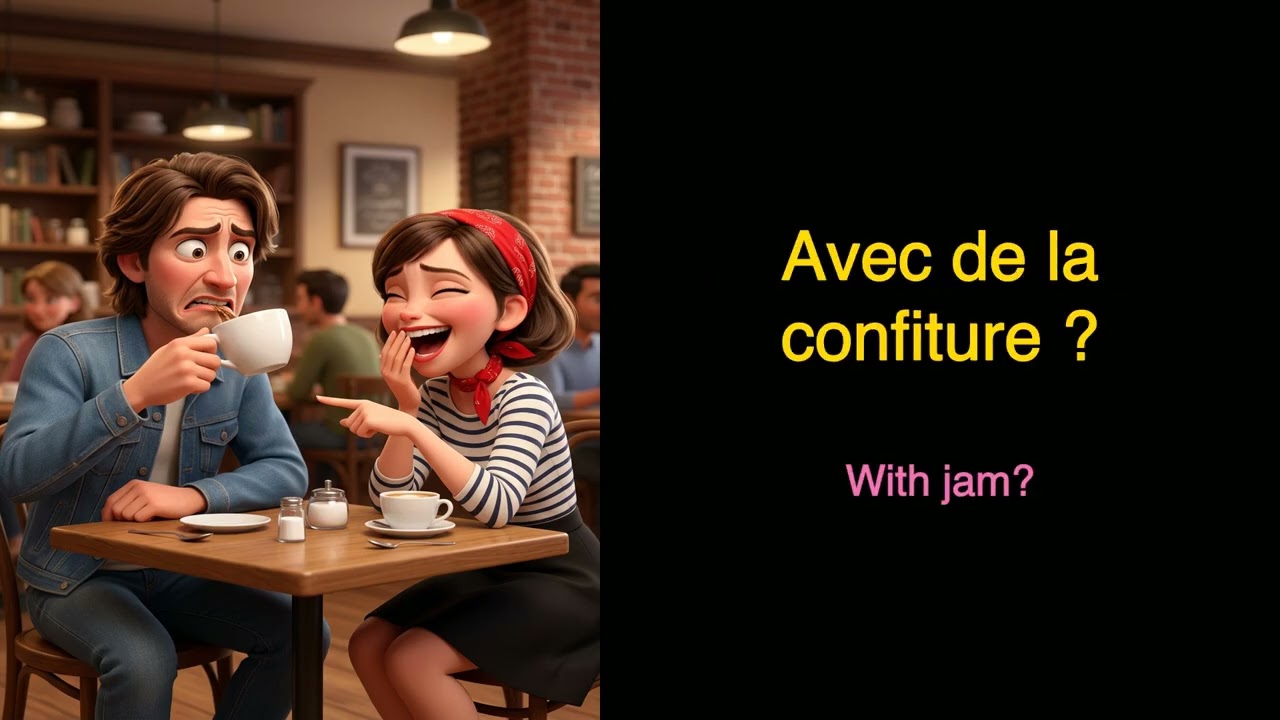
In this A1 French lesson, you’ll join Léo and Chloé at a quiet café as they try to decide what to drink. Through their simple and funny conversation, you’ll learn essential phrases for ordering coffee or tea, asking what someone wants, and even changing your mind in French!
💬 Video Transcript
Léo: Salut Chloé !
(Léo: Hi Chloé!)
Chloé: Salut Léo !
(Chloé: Hi Léo!)
Léo: Comment ça va ?
(Léo: How are you?)
Chloé: Ça va bien, merci. Et toi, ça va ?
(Chloé: I’m well, thank you. And you, how are you?)
Léo: Oui, ça va très bien. Je suis content.
(Léo: Yes, I’m very well. I’m happy.)
Chloé: Moi aussi, je suis contente.
(Chloé: Me too, I’m happy.)
Léo: J’aime bien ce café.
(Léo: I like this café.)
Chloé: Oui, c’est un café très sympa.
(Chloé: Yes, it’s a very nice café.)
Léo: C’est calme.
(Léo: It’s quiet.)
Chloé: Très calme. C’est bien.
(Chloé: Very quiet. That’s good.)
Léo: Alors… Qu’est-ce que tu veux boire ?
(Léo: So… What do you want to drink?)
Chloé: Hmm, je ne sais pas. Et toi, qu’est-ce que tu veux ?
(Chloé: Hmm, I don’t know. And you, what do you want?)
Léo: Moi, je pense que je voudrais un café.
(Léo: Me, I think I would like a coffee.)
Chloé: Un café ? Bonne idée.
(Chloé: A coffee? Good idea.)
Léo: Oui, un bon café.
(Léo: Yes, a good coffee.)
Chloé: Tu veux un café noir ?
(Chloé: Do you want a black coffee?)
Léo: Non, je ne veux pas un café noir. Je voudrais un café avec du lait.
(Léo: No, I don’t want a black coffee. I would like a coffee with milk.)
Chloé: D’accord. Un café avec du lait pour Léo.
(Chloé: Okay. A coffee with milk for Léo.)
Léo: C’est ça. Et toi, Chloé ? Qu’est-ce que tu veux ?
(Léo: That’s right. And you, Chloé? What do you want?)
Chloé: Moi, je voudrais un thé.
(Chloé: Me, I would like a tea.)
Léo: Ah, un thé ?
(Léo: Oh, a tea?)
Chloé: Oui, un thé, s’il te plaît.
(Chloé: Yes, a tea, please.)
Léo: Tu veux un thé avec du lait ?
(Léo: Do you want a tea with milk?)
Chloé: Non, merci. Je voudrais un thé sans lait.
(Chloé: No, thank you. I would like a tea without milk.)
Léo: D’accord. Donc, un thé pour toi.
(Léo: Okay. So, a tea for you.)
Chloé: Oui. Juste un thé.
(Chloé: Yes. Just a tea.)
Léo: Et pour moi, un café avec du lait.
(Léo: And for me, a coffee with milk.)
Chloé: Parfait.
(Chloé: Perfect.)
Léo: Attends…
(Léo: Wait…)
Chloé: Oui ? Qu’est-ce qu’il y a ?
(Chloé: Yes? What’s wrong?)
Léo: Peut-être que je veux un thé aussi.
(Léo: Maybe I want a tea too.)
Chloé: Ah oui ? Tu veux un thé, comme moi ?
(Chloé: Oh really? You want a tea, like me?)
Léo: Oui, un thé, c’est bien.
(Léo: Yes, a tea, that’s nice.)
Chloé: Tu veux un thé avec du lait ?
(Chloé: Do you want a tea with milk?)
Léo: Oui, je voudrais un thé avec du lait.
(Léo: Yes, I would like a tea with milk.)
Chloé: D’accord. Donc, deux thés ?
(Chloé: Okay. So, two teas?)
Léo: Hum… non. Finalement, non.
(Léo: Um… no. In the end, no.)
Chloé: Ah ? Tu changes d’avis ?
(Chloé: Oh? You’re changing your mind?)
Léo: Oui. Le café ici est très bon.
(Léo: Yes. The coffee here is very good.)
Chloé: C’est vrai, il est très bon.
(Chloé: That’s true, it’s very good.)
Léo: Donc, je reste sur ma première idée. Je voudrais un café.
(Léo: So, I’m sticking with my first idea. I would like a coffee.)
Chloé: D’accord. Un café avec du lait ?
(Chloé: Okay. A coffee with milk?)
Léo: Oui, c’est ça. Un café avec du lait. Tu es sûre pour toi ?
(Léo: Yes, that’s right. A coffee with milk. Are you sure for you?)
Chloé: Pour moi ? Oui, je suis sûre.
(Chloé: For me? Yes, I’m sure.)
Léo: Tu veux un thé ?
(Léo: You want a tea?)
Chloé: Oui, je voudrais un thé.
(Chloé: Yes, I would like a tea.)
Léo: Un thé sans lait.
(Léo: A tea without milk.)
Chloé: Oui, un thé sans lait. C’est parfait pour moi.
(Chloé: Yes, a tea without milk. That’s perfect for me.)
Léo: Très bien. Alors, on est d’accord.
(Léo: Very good. So, we agree.)
Chloé: Oui, on est d’accord.
(Chloé: Yes, we agree.)
Léo: On récapitule une dernière fois.
(Léo: Let’s recap one last time.)
Chloé: D’accord.
(Chloé: Okay.)
Léo: Pour moi, un café.
(Léo: For me, a coffee.)
Chloé: Avec du lait.
(Chloé: With milk.)
Léo: Oui. Et pour toi, un thé.
(Léo: Yes. And for you, a tea.)
Chloé: Sans lait.
(Chloé: Without milk.)
Léo: C’est parfait. On peut appeler le serveur.
(Léo: That’s perfect. We can call the waiter.)
Chloé: Oui, allons-y.
(Chloé: Yes, let’s go.)
Léo: Monsieur, s’il vous plaît !
(Léo: Sir, please!)
Chloé: Bonjour monsieur.
(Chloé: Hello, sir.)
Léo: Bonjour. Nous voudrions commander, s’il vous plaît.
(Léo: Hello. We would like to order, please.)
Chloé: Oui, s’il vous plaît.
(Chloé: Yes, please.)
Léo: Alors, je voudrais un café avec du lait.
(Léo: So, I would like a coffee with milk.)
Chloé: Et moi, je voudrais un thé, s’il vous plaît.
(Chloé: And me, I would like a tea, please.)
Léo: Merci beaucoup.
(Léo: Thank you very much.)
Chloé: Merci !
(Chloé: Thank you!)
📝 Essential Vocabulary
Here are some of the key words and phrases from Léo and Chloé’s conversation. Listen to the pronunciation to practice your speaking skills.
| Target Language | English Translation | Pronunciation |
|---|---|---|
| un café | a coffee | |
| un thé | a tea | |
| avec du lait | with milk | |
| sans lait | without milk | |
| Je voudrais | I would like | |
| Qu’est-ce que tu veux ? | What do you want? | |
| changer d’avis | to change one’s mind | |
| le serveur | the waiter | |
| s’il vous plaît | please (formal) |
🔍 Grammar Focus
Let’s look at two important grammar points from the conversation.
1. How to Order Politely: “Je voudrais”
In French, Je voudrais is the most common and polite way to say “I would like.” It’s the conditional tense of the verb vouloir (to want). While you can say Je veux (“I want”), using Je voudrais is much more polite, especially when speaking to a waiter or someone you don’t know well.
Notice how Léo and Chloé use it throughout the conversation:
- Léo: Moi, je pense que je voudrais un café. (Me, I think I would like a coffee.)
- Chloé: Moi, je voudrais un thé. (Me, I would like a tea.)
- Léo: Je voudrais un café avec du lait. (I would like a coffee with milk.)
When they finally order from the waiter, they use the plural form, Nous voudrions (“We would like”), which is also very polite.
2. Customizing Your Order: “Avec” and “Sans”
Two of the most useful prepositions for ordering food and drinks are avec (with) and sans (without). You can use them to specify exactly how you want your item.
In the story, Léo and Chloé use them to describe their drinks:
- Léo wants his coffee with milk:
Je voudrais un café **avec du lait**. - Chloé wants her tea without milk:
Je voudrais un thé **sans lait**.
You can apply this to almost anything: une salade sans oignons (a salad without onions), un sandwich avec fromage (a sandwich with cheese), etc. It’s a simple but powerful way to get exactly what you want!
🌍 Cultural Tip
🃏 Flip & Learn
Review the key phrases from this lesson with these flashcards.
I would like a coffee with milk.
Je voudrais un café avec du lait.
What do you want to drink?
Qu'est-ce que tu veux boire ?
A tea without milk, please.
Un thé sans lait, s'il te plaît.
To change one's mind
Changer d'avis
We would like to order, please.
Nous voudrions commander, s'il vous plaît.
💡 Key Takeaways
Here are the most important points to remember from this lesson:
- Use
Je voudrais...(“I would like…”) to politely order food and drinks in French. - Remember the prepositions
avec(with) andsans(without) to customize your order, likeun café avec du laitorun thé sans lait. - The phrase
Qu'est-ce que tu veux ?is a common, informal way to ask a friend “What do you want?”. - Use
s'il te plaîtwith friends (when usingtu) ands'il vous plaîtwith people you don’t know, like a waiter. - If you’re indecisive, you can say
Je change d'avis(“I’m changing my mind”).
🎯 Practice Quiz
Test your understanding of the dialogue and vocabulary with this short quiz!
Question
Question
Question
✍️ Fill in the Blanks
Let’s test your spelling and memory! Fill in the missing words below. Use correct spelling.
Fill in the blank
Fill in the blank
Support Us
Did you find this lesson helpful? Your support is what makes it possible for us to keep creating free, high-quality educational content.