Comment Allez-Vous ? Greet People in French ☕
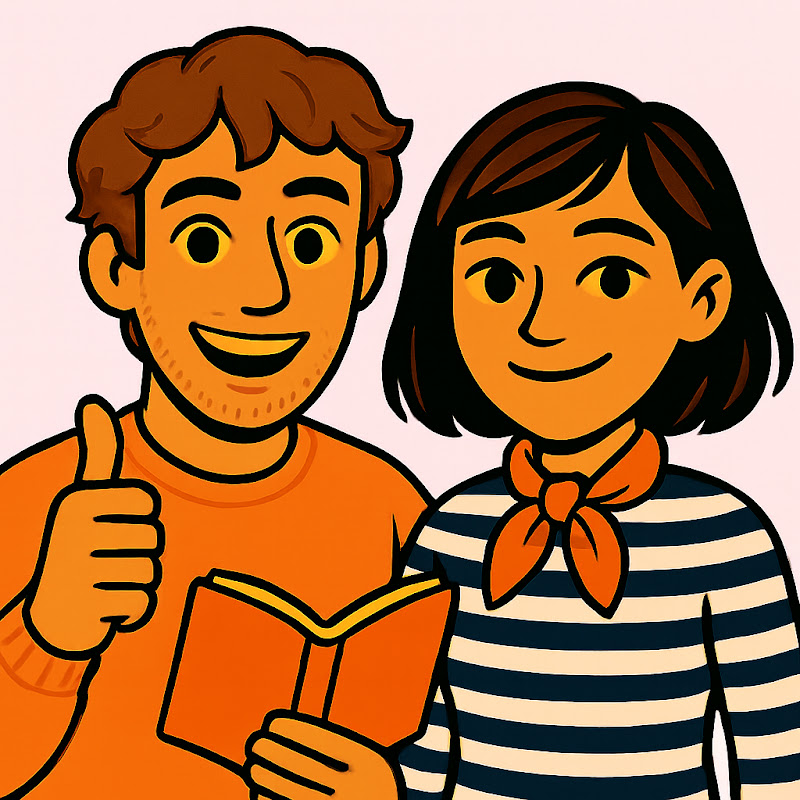
Master meeting pleasantries, polite check-ins, and parting formulas on a sunny Paris café terrace with Chloé and Léo.
- Lesson 59 of 68 in this unit
- Beginner · A1 — First words, greetings, and basic phrases
- Core — a must-do lesson, on every path
🗨 Autumn Morning on the Place
Bonjour ! That means “hello.” Today, we are learning how to meet someone, ask how they are doing, and say goodbye. You will learn to navigate the clear boundary between polite restraint with neighbors and casual warmth with friends.
Here on the cobblestones of Place de la Contrescarpe, the autumn sun warms our round zinc table. Léo Moreau, my neighbor who is in his early twenties like me, springs up from his wicker chair to rehearse his Latin Quarter greetings before our fellow students arrive.
Léo finishes his theatrical greeting with a grand courtier bow. His elbow catches the metal sugar pot, sending it clattering across the zinc table and scattering white grains right beside my cup of hot café.

Place de la Contrescarpe Greetings
A 5-round Place de la Contrescarpe terrace conversation builder where learners drag or tap French chips into one- or two-slot speech bubbles as Léo and Chloé greet an older Rue Mouffetard neighbor (causing Léo's courtier bow to spill the sugar pot beside Chloé's café), switch to casual classmate banter at their round zinc table, and pack up for class.
🔒 You've reached today's exercise limit. Become a member to keep playing.
♥ Upgrade About a minute · practices this lesson Sign in to play Panda Exercises You played your free exercise. Sign in to keep playing.Quick check
🔍 Meeting, Checking In, and Saying Goodbye
When Léo puffed out his chest, he used the formal inquiry formula comment allez-vous
. This means “how are you?” when speaking politely to a stranger, an elder, or a professor. Notice the rhythmic link between the words: the silent -t in comment connects smoothly to the vowel in allez, sounding like koh-mahn-tah-lay-VOO.
To answer that your morning is going splendidly, use très bien
, meaning “very well.” The final -s in très stays silent, keeping the syllables tight and clean: treh-BYEN.
To return the question with polite restraint, ask et vous ?
, which means “and you?” The word et means “and,” pronounced ay.
When introducing yourself to someone new, French speakers say “delighted to meet you.” Because I am a woman, I write it with an extra -e at the end: enchantée
. A man like Léo writes enchanté
. Both forms sound identical in speech: ahn-shahn-TAY.
I sigh affectionately as Léo drops his mock-dignified stance and laughs. He switches instantly to the informal register we use between classmates.
First, he asks ça va
, which translates informally to “how are you?” or “how’s it going?” It is quick, practical, and universal among friends.
He also pairs it with comment vas-tu
. This inquiry means “how are you?”, but uses tu for close companions. The final -s in vas is silent: koh-mahn vah-tew. To make the French u sound in tu, round your lips tightly as if saying “oo” while trying to pronounce “ee”.
When life is running smoothly without drama, reply with pas mal
, meaning “not bad.” In my drawing studio at the Beaux-Arts, when a sketch has balanced proportions, pas mal is the highest compliment our instructor gives.
To bounce the inquiry back to a close peer, use et toi ?
, meaning “and you?” The vowel combination -oi makes the crisp sound TWAH.

When it is time to pack up your brushes and head to class, use the departure formula à plus tard
, meaning “see you later.” The final -d in tard is silent: ah plew TAHR.
À mon avis, clear social lines keep life tidy. You use vous for polite distance, tu for companions, and bref, everyone knows where they stand.
🎙 Rehearsing on the Terrace
Léo brushes the spilled sugar off our table and glances toward the square. An older resident from Rue Mouffetard is walking toward us to say hello. Léo freezes, caught between his easy Marseille warmth and Parisian decorum.
He whispers across the table: “Quick, Chloé! If she greets us formally, how do we return the question politely?”
On verra bien.
Fill in the blank
Your prompt choice settles Léo’s nerves, giving him the poise he needs to face our neighbor with proper respect.
Now, practice the entire conversation with Léo across the table. Answer his formal greeting with your own polite line:
Enchantée ! Très bien, et vous ?
Delighted to meet you! Very well, and you?
Say ahn-shahn-TAY, keep the s silent in très, and rise on et vous.
Léo switches over to informal student banter:
Pas mal, et toi ?
Not bad, and you?
Keep the s in pas silent, and say toi as TWAH.
Léo collects his history notes and stands up:
À plus tard !
See you later!
Make ah plew TAHR crisp, keeping the d completely silent.
🎯 Test Your Balance
Take a breath and look at how these phrases balance each other on the page.
Quick check
Fill in the blank
Quick check
📝 Words from the Square
| Word | Meaning | Notes | Listen |
|---|---|---|---|
| comment allez-vous | how are you? | koh-mahn-tah-lay-VOO · formal inquiry for elders, professors, and strangers | |
| comment vas-tu | how are you? | koh-mahn vah-tew · informal inquiry for friends and peers | |
| ça va | how are you? / it goes | sah-VAH · casual everyday check-in and response | |
| très bien | very well | treh-BYEN · positive status response | |
| pas mal | not bad | pah-MAHL · neutral everyday response | |
| enchanté | delighted to meet you (m.) | ahn-shahn-TAY · introduction pleasantry spoken by a man | |
| enchantée | delighted to meet you (f.) | ahn-shahn-TAY · introduction pleasantry spoken by a woman | |
| et vous ? | and you? | ay-VOO · formal rebound question | |
| et toi ? | and you? | ay-TWAH · informal rebound question | |
| à plus tard | see you later | ah plew TAHR · departure formula when meeting again later |
💡 Precision and Poise
Écoute-moi bien. You can now walk onto any Parisian café terrace, greet a neighbor with polite distance, swap everyday news with a friend, and step away with clean confidence. You know how to choose between tu and vous, respond to how someone feels, and part without hesitation. In our next new-word lesson, you will read uppercase shop signs from A to J and master contrasting tu and tout.


 🎮 Bonus round

Back PandaTwin
Enjoyed this lesson? Back the course, and the money goes straight into the lessons that aren't written yet.