Reading Parisian Shop Signs from BOULANGERIE to CAFÉ 🥖
Master uppercase letters A through J on historic Parisian storefront signs, decode words like BOULANGERIE and CAFÉ, and train your ears on the contrast between tu and tout.
- Lesson 1 of 61 in this unit
- Beginner · A1 — First words, greetings, and basic phrases
- Core — a must-do lesson, on every path
Bonjour ! Hello! Today you will learn to recognize uppercase Latin letters from A to J on classic Parisian storefront signs like BOULANGERIE and CAFÉ. You will also train your tongue on the sharp sound contrast between tu and tout.
Right now, the morning light is hitting the wet cobblestones of the rue Mouffetard. I have an early studio critique at the École des Beaux-Arts, and my stomach is empty. Léo is jogging beside me, insisting he can spot our breakfast stop from fifty paces away just by reading the painted fascias. In fact, he wagered a fresh croissant that he can decode the signs faster than I can. On verra bien.

At the Beaux-Arts, we study typography and balance: the clean architecture of straight lines and curves. When Parisian shopkeepers painted their storefronts in the nineteenth century, they carved bold capital letters: A, B, C, D, E, F, G, H, I, J. Look up above the first doorway at the gilded wood.
The carved word above the display of golden loaves is BOULANGERIE, which means bakery.
Next door stands a storefront painted deep forest green. It does not smell like warm dough; it smells like cut stems and moist earth. The sign reads FLEURISTE, which means florist.
Across the cobblestone square, a striped awning shelters small zinc tables where morning patrons drink espresso. The awning displays the bold word CAFÉ, which means café or coffee.
Look at the balance in those three signs: BOULANGERIE gives you A, B, E, G, I; FLEURISTE gives you E, F, I; and CAFÉ gives you A, C, E, F. Along the street, signs for decor and gardens fill in D, H, and J.
Léo suddenly spots a bundle of dried wheat tied to a display frame and sprints ahead toward the green doorway.
🔍 Watch the Doorway
Léo marches directly into a wooden crate of tall white lilies, burying his nose into the blossoms before realizing his mistake. He sneezes loudly into his sleeve, blinking away bright yellow pollen from his cheekbones. I sigh affectionately when Léo is being ridiculous, gently tugging his jacket toward the golden sign next door.
Ah, d'accord ! Boulangerie !
Ah, okay! Bakery!
Enunciate each syllable cleanly: ah, dah-KOR, boo-lahn-zhree.
Quick check
We step under the gilded lettering of the bakery, enveloped by the smell of toasted crusts. Now comes a crucial distinction for your ears. In French, the letter u and the letter combination ou create entirely different words.
When I address Léo, my close friend and classmate, I say tu, which means you.
Notice the social boundary here: I use tu with Léo because we are peers. When we speak to the baker behind the counter, we switch to polite vous. But if Léo wants to order the entire pastry rack, he wants tout, which means all or everything.
🧭 Shaping Your Vowels
Écoute-moi bien. To say tu, shape your tongue as if you are saying the English letter “ee”, but push your lips forward into a tight, narrow circle, like whistling. For tout, pull your tongue into the back of your mouth and round your lips loosely, like the “oo” in “soup”.
We see the exact same contrast in another pair. The baker has known where the best tray is: su means known or found out.
And where are those hot loaves resting? They sit sous, which means under.

Léo stares at the glass counter, his eyes darting hungrily across the shelves.
🗨 At the Bakery Counter
Tu goûtes tout ?
Are you tasting everything?
Push your lips into a tight circle for tu, then pull your tongue back with looser lips for tout.
Settling the Street Wager
Two-act Parisian street-and-counter game where learners drag or tap carved verre églomisé fascia signs onto rue Mouffetard storefronts (Act I) and then complete Chloé and Léo's bakery counter dialogue by slotting minimal-pair vowel tiles (Act II).
🔒 You've reached today's exercise limit. Become a member to keep playing.
♥ Upgrade About a minute · practices this lesson Sign in to play Panda Exercises You played your free exercise. Sign in to keep playing.📖 Settling the Street Wager
Léo is still holding his nose from the lily pollen, pointing back and forth between the carved storefront signs. He needs to buy my breakfast to settle our morning bet, but he has to read the letters correctly to pay at the right counter.
Fill in the blank
Léo laughs, admitting defeat, and hands over a steaming bag of pastries without another word.
Quick check
Fill in the blank
Quick check
📝 Vocabulary
| Word | Meaning | Notes | Listen |
|---|---|---|---|
| BOULANGERIE | bakery | boo-lahn-zhree · feminine noun; iconic shop sign for fresh bread and pastries | |
| FLEURISTE | florist | fluh-REEST · masculine or feminine noun; shop selling cut flowers and plants | |
| CAFÉ | café, coffee | kah-FAY · masculine noun; neighborhood spot for espresso and socializing | |
| tu | you | tew · informal singular pronoun; reserved for close friends and peers. Say ’ee’ with tightly rounded lips. | |
| tout | all, everything | too · pronoun and adjective; final ’t’ is silent | |
| su | known, found out | s-ew · past participle of savoir. Say ’ee’ with tightly rounded lips. | |
| sous | under | soo · preposition; final ’s’ is silent; lips rounded with tongue pulled back |
💡 Sharp Eyes and Crisp Vowels
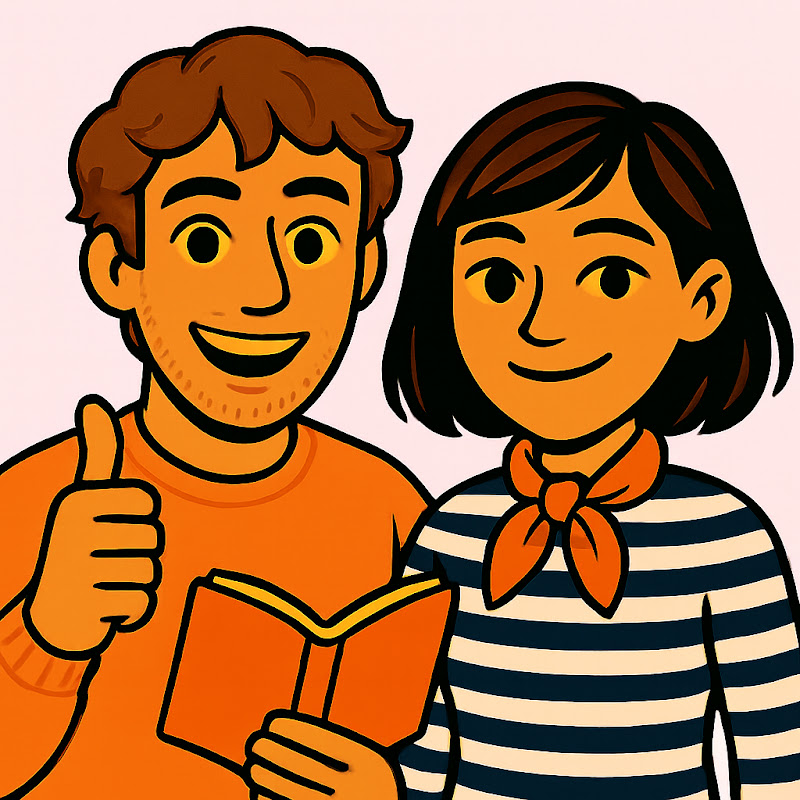
I adjust my red bandana with a bright, satisfied smile: bref, you can now decipher uppercase Parisian shopfronts from A to J and distinguish between contrasting vowel sounds like tu and tout. You know how to read the city’s carved streetscapes and navigate everyday interactions with practical confidence. Next, a core lesson introduces uppercase letters K - T, transit proper nouns, and a three-way vowel contrast.


Back PandaTwin
Léo says: Every lesson you share helps someone find their way into a new language. Thank you for being part of this.