Talking About Mobile Phones in Chinese: Adjectives & Descriptions 📱
Learn how to describe everyday objects like mobile phones in Chinese. Master essential adjectives for colors, size, and age in this practical beginner dialogue.
In this beginner-friendly lesson, Wang Wei and Li Na compare their mobile phones and discuss what they use them for. You will learn how to describe everyday objects using adjectives for size, age, and color, while mastering practical vocabulary like making calls and listening to music.
💬 Video Transcript (视频对话)
王伟: 李娜,你好!
(Wang Wei: Hello, Li Na!)
李娜: 王伟,你好!
(Li Na: Hello, Wang Wei!)
王伟: 你在做什么?
(Wang Wei: What are you doing?)
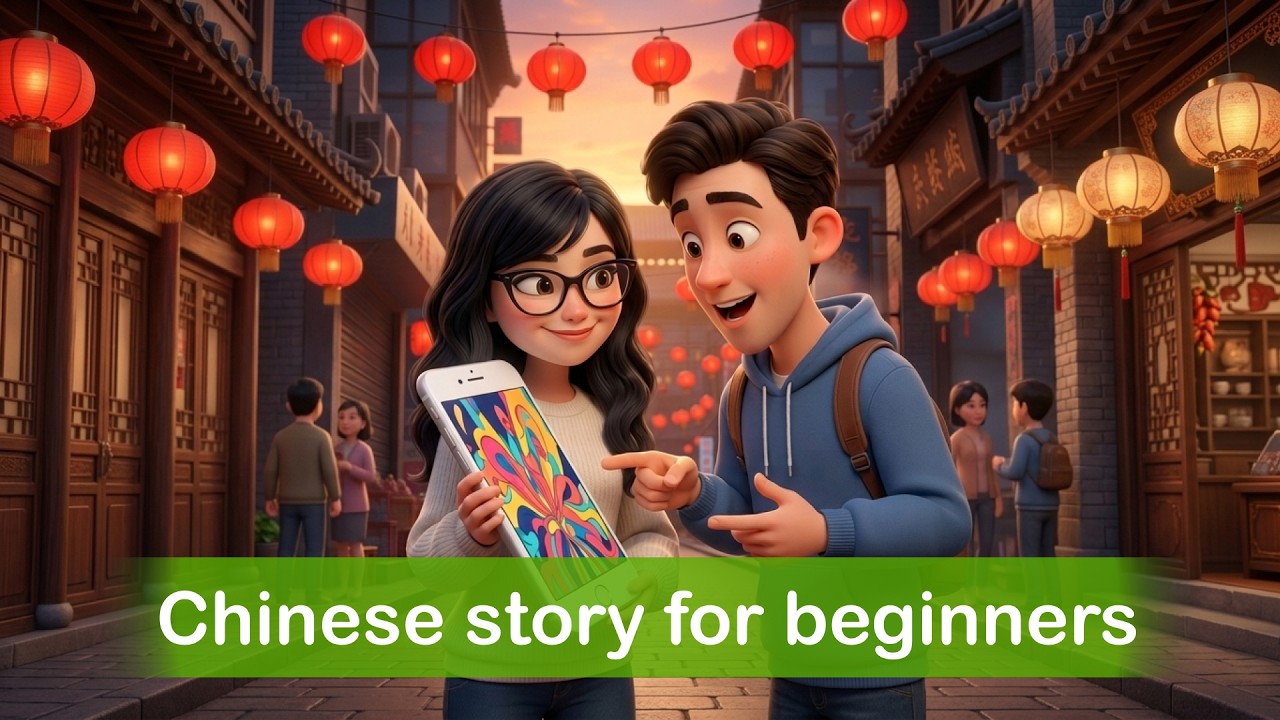
李娜: 我在看我的新手机。
(Li Na: I am looking at my new phone.)
王伟: 啊,这是你的手机吗?
(Wang Wei: Ah, is this your phone?)
李娜: 是,这是我的手机。
(Li Na: Yes, this is my phone.)
王伟: 你的手机很好看!
(Wang Wei: Your phone looks very nice!)
李娜: 谢谢你!
(Li Na: Thank you!)
王伟: 你的手机是什么颜色的?
(Wang Wei: What color is your phone?)
李娜: 我的手机是白色的。你喜欢白色吗?
(Li Na: My phone is white. Do you like white?)
王伟: 我很喜欢白色。白色的手机很好看。
(Wang Wei: I like white very much. White phones look very nice.)
李娜: 是啊,我也很喜欢。
(Li Na: Yes, I like it very much too.)
王伟: 你的手机是新的吗?
(Wang Wei: Is your phone new?)
李娜: 是,这是我的新手机。
(Li Na: Yes, this is my new phone.)
王伟: 你的手机大吗?
(Wang Wei: Is your phone big?)
李娜: 我的手机很大。你看。
(Li Na: My phone is very big. Look.)
王伟: 哇,真的很大。你的新手机很好。
(Wang Wei: Wow, it really is very big. Your new phone is very good.)
李娜: 谢谢。王伟,你的手机呢?
(Li Na: Thank you. Wang Wei, what about your phone?)
王伟: 我的手机在这里。
(Wang Wei: My phone is here.)
李娜: 你的手机是黑色的。
(Li Na: Your phone is black.)
王伟: 是的,我的手机是黑色的。
(Wang Wei: Yes, my phone is black.)
李娜: 黑色也很好看。你的手机是新的吗?
(Li Na: Black also looks very nice. Is your phone new?)
王伟: 不,我的手机不是新的。我的手机是旧的。
(Wang Wei: No, my phone is not new. My phone is old.)
李娜: 是吗?你的手机大吗?
(Li Na: Is that so? Is your phone big?)
王伟: 我的手机不大,我的手机很小。
(Wang Wei: My phone is not big, my phone is very small.)
李娜: 我看看。嗯,你的手机是有点儿小。
(Li Na: Let me see. Hmm, your phone is a little bit small.)
王伟: 是的,我的旧手机很小。
(Wang Wei: Yes, my old phone is very small.)
李娜: 我喜欢我的新手机。它很大。
(Li Na: I like my new phone. It is very big.)
王伟: 我也喜欢我的旧手机。它很小。
(Wang Wei: I also like my old phone. It is very small.)
李娜: 你用手机做什么?
(Li Na: What do you use your phone for?)
王伟: 我用手机打电话,也用手机看书。
(Wang Wei: I use my phone to make calls, and also use my phone to read books.)
李娜: 我也是。我用手机打电话。
(Li Na: Me too. I use my phone to make calls.)
王伟: 你也用手机看书吗?
(Wang Wei: Do you also use your phone to read books?)
李娜: 我不用手机看书。我用手机听音乐。
(Li Na: I do not use my phone to read books. I use my phone to listen to music.)
王伟: 听音乐很好。你的新手机很好用。
(Wang Wei: Listening to music is great. Your new phone is very useful.)
李娜: 是的,很好用。你的旧手机呢?好用吗?
(Li Na: Yes, it is very useful. What about your old phone? Is it useful?)
王伟: 我的旧手机也很好用。
(Wang Wei: My old phone is also very useful.)
李娜: 那很好!我们都有好手机。
(Li Na: That’s great! We both have good phones.)
王伟: 是的,我们都有好手机。
(Wang Wei: Yes, we both have good phones.)
李娜: 好的,王伟,我要回家了。
(Li Na: Okay, Wang Wei, I am going home.)
王伟: 好的,李娜。再见!
(Wang Wei: Okay, Li Na. Goodbye!)
李娜: 再见!
(Li Na: Goodbye!)
📝 Essential Vocabulary (核心词汇)
| Target Language | English Translation | Pronunciation |
|---|---|---|
| 手机 | mobile phone | |
| 颜色 | color | |
| 白色 | white | |
| 黑色 | black | |
| 新 | new | |
| 旧 | old | |
| 大 | big | |
| 小 | small | |
| 打电话 | to make a phone call | |
| 听音乐 | to listen to music |
🔍 Grammar Focus (语法重点)
Using 很 (hěn) with Adjectives
In English, we say “My phone is big,” using the verb “to be”. In Chinese, when an adjective directly describes a noun (functioning as the predicate), you generally do not use the verb 是 (shì). Instead, you connect them with an adverb of degree, most commonly 很 (hěn - very).
- 我的手机很大。 (My phone is very big.)
- 我的旧手机很小。 (My old phone is very small.)
The Particle 的 (de) for Possession and Description
The particle 的 (de) is one of the most common characters in Chinese. It is placed after a noun or pronoun to show possession, similar to “’s” in English. It is also placed after adjectives to link them to the noun they modify.
- Possession: 我的手机 (my phone)
- Description: 白色的手机 (white phone)
- Combined: 这是我的新手机。 (This is my new phone.)
🌍 Cultural Tip (文化提示)
🃏 Flip & Learn (翻转学习)
Mobile phone
手机 (shǒujī)
To make a phone call
打电话 (dǎ diànhuà)
White color
白色 (báisè)
New
新 (xīn)
To listen to music
听音乐 (tīng yīnyuè)
💡 Key Takeaways (主要收获)
- Describing Objects: Use adjectives like 大 (big), 小 (small), 新 (new), and 旧 (old) to describe items.
- Colors: You can ask about colors using “是什么颜色的?” (what color is it?). Common colors include 白色 (white) and 黑色 (black).
- Adjective Predicates: Remember to drop the verb “to be” (是) and instead use 很 (hěn) when an adjective is the main description of a sentence (e.g., 我的手机很大).
- Phone Activities: You can express what you use a tool for with the pattern “用 [tool] [action]”, like 用手机打电话 (use a phone to make calls) or 用手机听音乐 (use a phone to listen to music).
🎯 Practice Quiz (练习测验)
Question
Question
Question
✍️ Fill in the Blanks (填空练习)
Let’s test your spelling and memory! Fill in the missing words below. Use correct spelling.
Fill in the blank
Fill in the blank
Support Us
Did you find this lesson helpful? Your support is what makes it possible for us to keep creating free, high-quality educational content.