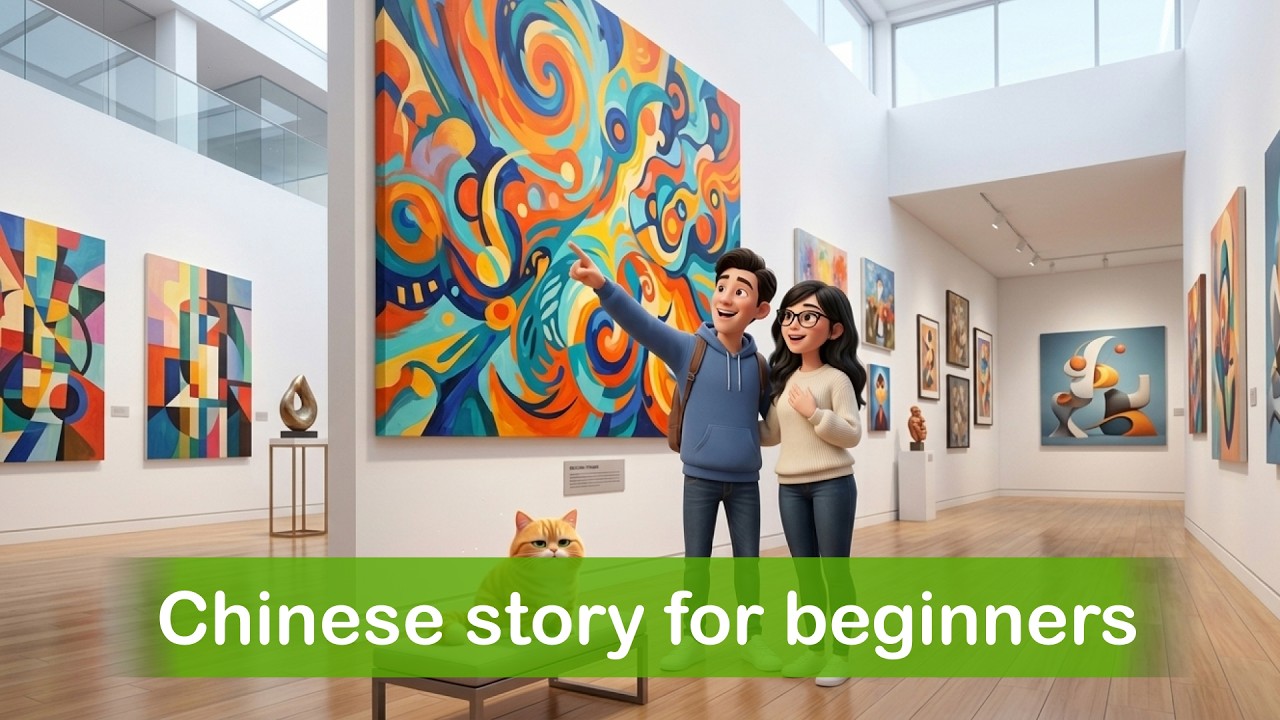
Talking About Hobbies in Chinese: Hobbies Dialogue & Essential Vocabulary 🎨
Learn how to talk about your hobbies in Mandarin Chinese with this simple story. Master essential vocabulary like 'like', 'read', 'listen to music', and 'watch movies'.
In this lesson, you’ll learn how to ask someone about their hobbies in Mandarin Chinese and how to share your own. Through a simple conversation between Wáng Wěi and Lǐ Nà, you’ll master essential phrases for talking about activities like reading books, listening to music, and watching movies.
💬 Video Transcript
王伟: 你好,李娜!
(Wang Wei: Hello, Li Na!)
李娜: 你好,王伟!
(Li Na: Hello, Wang Wei!)
王伟: 李娜,你喜欢做什么?
(Wang Wei: Li Na, what do you like to do?)
李娜: 我喜欢看书。
(Li Na: I like to read books.)
王伟: 你喜欢看书?
(Wang Wei: You like to read books?)
李娜: 是的,我喜欢看书。我还喜欢听音乐。
(Li Na: Yes, I like to read books. I also like to listen to music.)
王伟: 你也喜欢听音乐?
(Wang Wei: You also like to listen to music?)
李娜: 对。我喜欢看书,也喜欢听音乐。
(Li Na: Correct. I like to read books, and I also like to listen to music.)
王伟: 看书很好。听音乐也很好。
(Wang Wei: Reading books is good. Listening to music is also good.)
李娜: 你呢?王伟,你喜欢做什么?
(Li Na: And you? Wang Wei, what do you like to do?)
王伟: 我喜欢看电影。
(Wang Wei: I like to watch movies.)
李娜: 看电影?
(Li Na: Watch movies?)
王伟: 对,我很喜欢看电影。我也喜欢运动。
(Wang Wei: Correct, I really like to watch movies. I also like to do sports.)
李娜: 你喜欢运动?
(Li Na: You like sports?)
王伟: 是的,我喜欢运动。我喜欢看电影,也喜欢运动。
(Wang Wei: Yes, I like sports. I like to watch movies, and I also like sports.)
李娜: 王伟,我也喜欢看电影!
(Li Na: Wang Wei, I also like to watch movies!)
王伟: 你也喜欢看电影?太好了!
(Wang Wei: You also like to watch movies? That’s great!)
李娜: 是的,我也很喜欢看电影。
(Li Na: Yes, I also really like to watch movies.)
王伟: 我们都喜欢看电影。
(Wang Wei: We both like to watch movies.)
李娜: 是的,我们都喜欢看电影。
(Li Na: Yes, we both like to watch movies.)
王伟: 那,我们一起看电影,好吗?
(Wang Wei: Then, let’s watch a movie together, okay?)
李娜: 好啊!我们一起看电影。
(Li Na: Okay! Let’s watch a movie together.)
王伟: 太好了!
(Wang Wei: Great!)
李娜: 嗯,太好了。
(Li Na: Mhm, great.)
王伟: 再见,李娜!
(Wang Wei: Goodbye, Li Na!)
李娜: 再见,王伟!
(Li Na: Goodbye, Wang Wei!)
📝 Essential Vocabulary
Here are the key words and phrases you’ll need to understand the conversation about hobbies. Listen to the pronunciation to practice your speaking.
| Chinese (Pinyin) | English Translation | Pronunciation |
|---|---|---|
| 喜欢 (xǐhuān) | to like | |
| 做什么 (zuò shénme) | do what | |
| 看书 (kànshū) | to read books | |
| 听音乐 (tīng yīnyuè) | to listen to music | |
| 看电影 (kàn diànyǐng) | to watch movies | |
| 运动 (yùndòng) | sports; to exercise | |
| 也 (yě) | also, too | |
| 都 (dōu) | both, all | |
| 一起 (yīqǐ) | together |
🔍 Grammar Focus
This conversation introduces two very common and important adverbs in Mandarin: 也 (yě) and 都 (dōu). Understanding how to use them will make your Chinese sound much more natural.
1. Using 也 (yě) for “Also” or “Too”
The adverb 也 (yě) is used to show that two things have something in common. It’s similar to “also” or “too” in English, but its placement in the sentence is different. In Chinese, 也 (yě) always comes before the verb.
Structure: Subject + 也 (yě) + Verb + Object
Look at these examples from the dialogue:
- 李娜: 我喜欢看书,也喜欢听音乐。 (Wǒ xǐhuān kànshū, yě xǐhuān tīng yīnyuè.)
- (I like to read books, and also like to listen to music.)
- 王伟: 我也喜欢运动。(Wǒ yě xǐhuān yùndòng.)
- (I also like sports.)
2. Using 都 (dōu) for “Both” or “All”
The adverb 都 (dōu) is used to summarize a group of two or more people or things, meaning “both” or “all.” Like 也 (yě), it is placed directly before the verb. It’s used when the subject is plural (like “we” or “they”) or refers to multiple items.
Structure: Plural Subject + 都 (dōu) + Verb Phrase
In the story, Wang Wei realizes he and Li Na share a common interest:
- 王伟: 我们都喜欢看电影。(Wǒmen dōu xǐhuān kàn diànyǐng.)
- (We both like to watch movies.)
Here, 我们 (wǒmen) means “we,” which is a plural subject. 都 (dōu) emphasizes that this applies to everyone in the group (in this case, both of them).
🌍 Cultural Tip
🃏 Flip & Learn
Practice the key phrases from this lesson to build your fluency.
What do you like to do?
你喜欢做什么? (Nǐ xǐhuān zuò shénme?)
I like to read books.
我喜欢看书。(Wǒ xǐhuān kànshū.)
I also like to listen to music.
我也喜欢听音乐。(Wǒ yě xǐhuān tīng yīnyuè.)
We both like to watch movies.
我们都喜欢看电影。(Wǒmen dōu xǐhuān kàn diànyǐng.)
💡 Key Takeaways
Here are the most important points to remember from this lesson:
- Asking about hobbies: Use the simple question
你喜欢做什么?(Nǐ xǐhuān zuò shénme?)which means “What do you like to do?”. - Stating your hobbies: The structure is
我喜欢 (Wǒ xǐhuān) + [Hobby]. For example,我喜欢看书 (Wǒ xǐhuān kànshū). - Using 也 (yě) for “also”: Place
也before the verb to indicate that you also do or like something. For example,我也喜欢看电影(I also like to watch movies). - Using 都 (dōu) for “both/all”: When talking about what a group of people have in common, use
都before the verb. For example,我们都喜欢看电影(We both like to watch movies).
🎯 Practice Quiz
Test your understanding of the vocabulary and grammar from the dialogue.
Question
Question
Question
✍️ Fill in the Blanks
Let’s test your spelling and memory! Fill in the missing words below. Use correct spelling.
Fill in the blank
Fill in the blank
Support Us
Did you find this lesson helpful? Your support is what makes it possible for us to keep creating free, high-quality educational content.